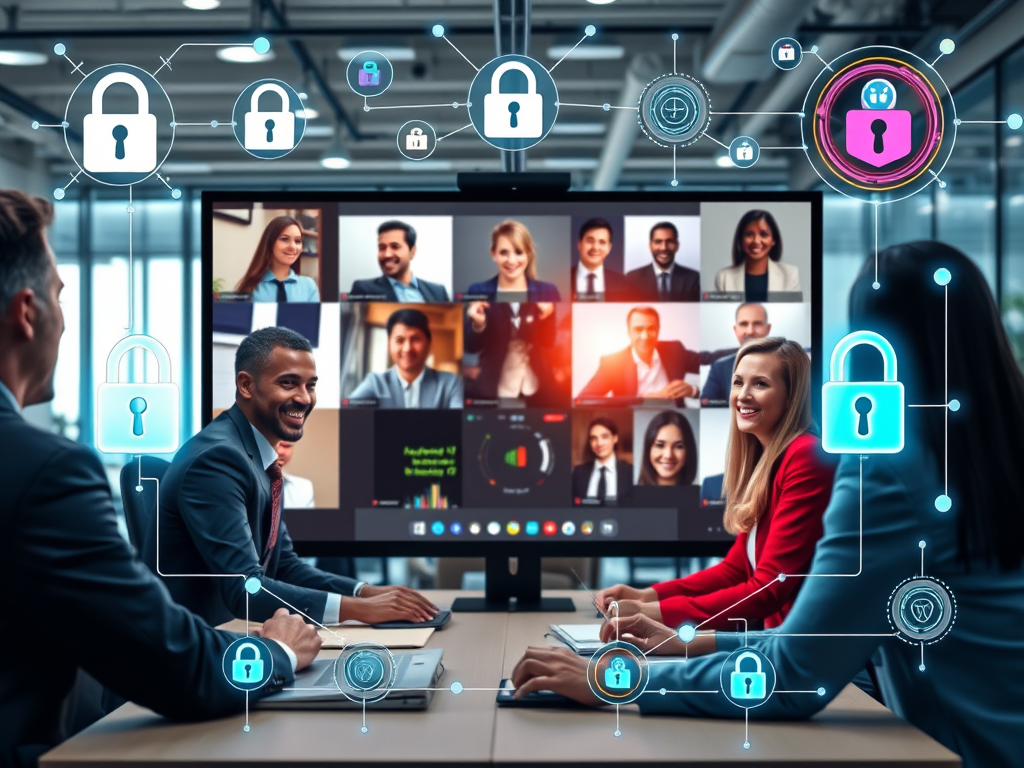
Remote work has shifted from a temporary arrangement to a permanent operating model for enterprises across India. Government bodies, PSUs, BFSI firms, educational institutions, and fast-growing startups now rely heavily on digital collaboration platforms. These platforms are used to run meetings, share documents, and communicate in real time. While this shift has improved flexibility and productivity, it has also expanded the cybersecurity attack surface.

For Indian enterprises, cybersecurity in remote work is no longer just an IT concern-it is a business-critical priority. From data sovereignty and regulatory compliance to protection against breaches and espionage, secure digital collaboration has become essential.
This blog explores how modern digital collaboration platforms protect enterprise data. It highlights the unique challenges faced by Indian organizations. It also discusses how Made-in-India platforms like Daakia are addressing these concerns.
Why Cybersecurity Is a Bigger Challenge in Remote Work
Remote work environments introduce multiple security vulnerabilities that traditional office setups did not. Employees access systems from home networks, personal devices, and public internet connections-often outside direct IT supervision.
Key risk factors include:
- Unsecured home Wi-Fi networks
- Use of personal laptops and mobile devices
- Increased phishing and social engineering attacks
- Overexposure of sensitive data through meetings and file sharing
According to industry estimates, global cybercrime losses are expected to cross $10.5 trillion annually, making data breaches one of the costliest business risks today. For Indian enterprises handling citizen data, financial records, or confidential communications, a single breach can lead to regulatory penalties. It can also cause reputational damage. Furthermore, it will result in long-term trust erosion.

This is why secure online meeting software and collaboration platforms play a critical role in remote work cybersecurity.
How Digital Collaboration Platforms Secure Remote Work
Modern collaboration platforms are designed with security at their core. Below are the key cybersecurity mechanisms that protect enterprise communication and data.
- End-to-End Encryption for Meetings and Messages
End-to-end encryption ensures that meeting audio, video, chats, and shared content stay unreadable to unauthorized parties. This holds true even if the data is intercepted in transit.
Enterprise-grade platforms use AES-256 encryption to protect communications, ensuring only intended participants can access the information. This is particularly critical for government discussions, board meetings, and legal or financial conversations.
At Daakia, encryption is implemented with a focus on data sovereignty, ensuring sensitive enterprise data remains protected within controlled environments.
- Multi-Factor Authentication (MFA) to Prevent Unauthorized Access
Passwords alone are no longer enough. Multi-factor authentication (MFA) adds an extra security layer by requiring extra verification, like:
- One-time passwords
- Authentication apps
- Bio-Metric verification
Studies show that MFA can prevent nearly 99.9% of account compromise attempts. Daakia integrates MFA to guarantee that even if login details are exposed, unauthorized users can’t access meetings or dashboards.
- Role-Based Access Control for Enterprise Governance
Role-based access control limits what users can see and do based on their role within the organization. This prevents accidental data exposure and insider threats.
For example:
- Admins can manage users and permissions
- Moderators can control meetings
- Participants can only access authorized content
Daakia enables enterprises to define granular access controls, ensuring sensitive discussions and documents are visible only to approved personnel.
- Secure File Sharing and Encrypted Cloud Storage
Remote collaboration involves constant file exchange, contracts, presentations, reports, and recordings. Without security controls, file sharing becomes a major vulnerability.
Secure collaboration platforms offer:
- Encrypted file storage
- Access-controlled sharing
- Audit logs and activity tracking
- Version history and rollback
Daakia’s secure file-sharing framework ensures that enterprise documents stay protected while still being easily accessible to authorized teams.
- Regular Security Updates and Patch Management
Cyber attackers often exploit unpatched software vulnerabilities. According to security reports, over 60% of breaches originate from known but unpatched issues.
Enterprise collaboration platforms mitigate this risk through:
- Regular security updates
- Automated patch deployment
- Continuous vulnerability monitoring
Daakia prioritizes proactive patch management to stay ahead of emerging cyber threats.
- AI-Powered Threat Detection and Monitoring
Artificial intelligence plays a growing role in cybersecurity. AI-driven systems monitor user behavior to detect anomalies like:
- Suspicious login attempts
- Unusual access patterns
- Potential credential stuffing attacks
Daakia uses AI-powered monitoring to alert administrators in real-time, enabling rapid response before threats escalate.
- Compliance with Indian and Global Security Standards
Indian enterprises operate under strict regulatory frameworks, including data protection and sector-specific guidelines. Secure collaboration platforms must align with:
- GDPR and global privacy norms
- Industry-specific compliance requirements
- Government and PSU security expectations
As a Made-in-India platform, Daakia prioritizes compliance and sovereignty. This focus makes it suitable for regulated sectors, which include government, education, healthcare, and finance.
Best Practices for Secure Remote Collaboration
While technology plays a major role, organizations must also adopt strong cybersecurity practices:
- Use strong, unique passwords and password managers
- Enable MFA across all collaboration tools
- Train employees to recognize phishing and social engineering attempts
- Restrict access to sensitive meetings and documents
- Use VPNs for secure internet access
- Regularly audit logs and system activity
Cybersecurity is most effective when technology and user awareness work together.
The Future of Cybersecurity in Remote Work
As remote and hybrid work models mature, cybersecurity will evolve further. Emerging trends include:
- Zero Trust security architectures
- Quantum-resistant encryption
- Blockchain-based identity verification
- Secure Access Service Edge (SASE) frameworks
Indian enterprises are increasingly prioritizing sovereign, compliant, and AI-driven security solutions to protect their digital operations.
Why Secure Collaboration Platforms Like Daakia Matter
Generic global tools often follow a one-size-fits-all approach. Indian enterprises, nevertheless, need platforms that understand local compliance, data sensitivity, and operational realities.

Daakia addresses this gap by offering:
- Secure, encrypted collaboration
- India-first compliance and data control
- Enterprise-grade access management
- AI-powered security monitoring
By adopting secure collaboration platforms built for enterprise needs, organizations can allow remote work without compromising data security.
Conclusion
Cybersecurity is no longer optional in a remote work environment. Digital collaboration platforms sit at the center of enterprise communication, making their security capabilities critical to business continuity.
Platforms like Daakia offer various features. These include encryption, MFA, and RBAC. They also supply secure file sharing and AI-driven threat detection. Additionally, they guarantee compliance alignment. Together, these features help organizations build a secure, resilient, and future-ready remote work ecosystem.
As cyber threats continue to evolve, enterprises should invest in secure collaboration tools. This investment will best position them to protect their data. These tools should be sovereign and purpose-built. They will also safeguard their reputation and growth.
FAQs: Cybersecurity and Secure Collaboration with Daakia
1. How does Daakia guarantee cybersecurity for remote work?
Daakia uses end-to-end encryption, multi-factor authentication, role-based access control, AI-powered threat monitoring, and secure file sharing to protect enterprise communication.
2. Is Daakia suitable for government and PSU organizations?
Yes. Daakia is a Made-in-India platform designed with data sovereignty, compliance, and enterprise security requirements in mind.
3. How does Daakia protect meeting data from unauthorized access?
Daakia secures meetings using encrypted sessions, controlled access permissions, MFA, and real-time monitoring for suspicious activity.
4. Can Daakia support secure collaboration for regulated industries?
Absolutely. Daakia is built for sectors like government, education, healthcare, and finance that need high security and compliance standards.
5. Why should enterprises choose Daakia over generic global tools?
Daakia offers India-first security, better control over data, compliance readiness, and enterprise-focused collaboration features tailored to local requirements.
Leave a Reply